
Resources 7 min read
Vegan Documentaries, Organized by What You Care About
A short, honest shelf of films and books, sorted by what brought you here. Recommending something is not the same as vouching for every claim in it.
Documentaries are how a lot of people first start thinking about food and animals, and a few of them are worth your evening. They are also persuasion, edited to land an argument, which means a film can be moving and get the big picture right while pushing a particular number further than the evidence does. That is the useful way to watch them: take the argument seriously, and treat the sharpest statistics on screen as a reason to read further, not the last word. This list is organized by what brought you here, with an honest note on each about where the claim is on solid ground and where to reach for a steadier figure.
A recommendation here is not an endorsement of every statistic a film puts on screen. Each card links to the film's official source. The best use of any of these is as a prompt to go read further.
If you care most about the animals
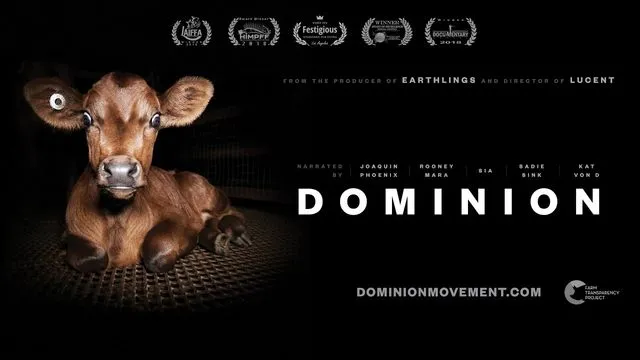
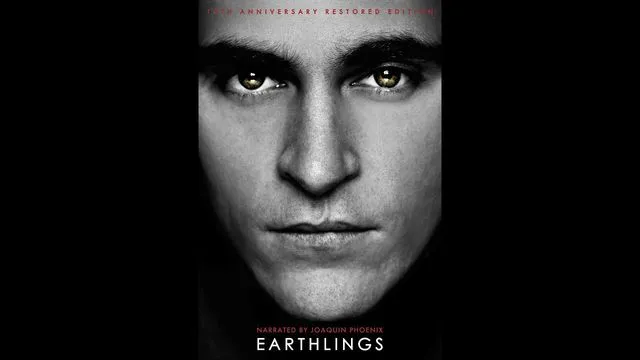
Three films define this corner, and all are hard to watch by design. Dominion (2018) uses drone and hidden-camera footage to document standard practices in modern animal agriculture, mostly in Australia. It is comprehensive and tries to make an argument from sentience rather than from shock alone, and it is free to watch. Land of Hope and Glory (2017) is the UK counterpart, narrated by Ed Winters (Earthling Ed) and built from undercover footage across roughly a hundred British farms; it is also free. Earthlings (2005), narrated by Joaquin Phoenix, is the older landmark, ranging across pets, food, clothing, entertainment, and research. It is dated now in its footage and some of its framing, but it remains the film most people cite as the one that changed their mind.
The honest caveat for all three: they show real practices, and that is their strength, but graphic footage is an emotional argument, not a representative survey. A scene proves that something happens, not how often. If you want to know how common a given practice is, the film cannot tell you; the figures have to come from elsewhere. Watch these for what standard farming involves, then read for how typical it is.
If you care most about your health

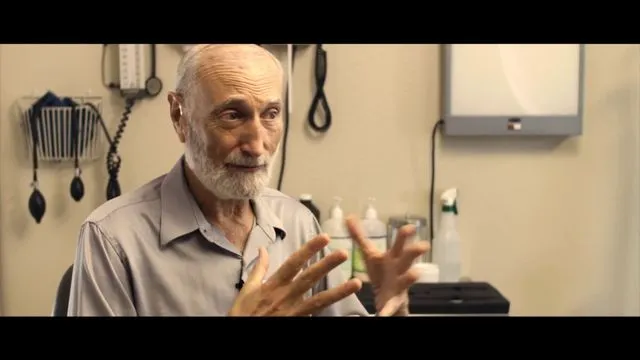
Health is the category where these films reach hardest, so it is also where a little context helps most. The direction they point, that a diet built on whole plant foods is good for your heart and your long-term health, is the same direction mainstream nutrition research points. The friction is almost always about how big a given effect is, not whether it is real.
Forks Over Knives (2011) follows the case that a whole-food, plant-based diet can prevent, and in some cases reverse, heart disease and other chronic conditions. The direction it points is well supported: a diet built on whole plants is consistently linked to better heart health and lower chronic-disease risk. It makes that argument cleanly and confidently for a general audience, leaning on a focused set of studies, so watch it as a strong introduction and let the fuller detail come from the research behind it.
The Game Changers (2018), executive produced by James Cameron alongside a roster of elite athletes, follows a former special-forces trainer as he meets vegan strongmen, sprinters, and record holders to ask whether anyone really needs meat to perform. It is slick and genuinely motivating, and its core claim is on solid ground: you can build muscle, set records, and compete at the highest level on plants, and plenty of athletes already do. Where it reaches is in the mechanism, leaning on a few striking one-off demonstrations and a confident take on protein that some researchers called one-sided. Keep the big point, that a top plant-based athlete is no contradiction, and hold the single-study flourishes more loosely.
What the Health (2017) is the one that gets people talking, and that is a point in its favor. It put the link between diet and chronic disease in front of a huge audience and asked a fair question: if the evidence on meat and dairy is this strong, why is the conversation so quiet? Critics, including some who eat mostly plants, have pushed back on a handful of its numbers, and it helps to be clear about what that disagreement is about. It is about magnitude, not direction. The strongest example is also the simplest: the World Health Organization's cancer agency classifies processed meat as a Group 1 carcinogen, the same evidence category as tobacco smoking, for its established link to colorectal cancer. That the link is real is not up for debate. How much a given serving adds to your own risk is the part worth reading carefully, and our guide to what that classification does and does not mean walks through it. Watch the film for the questions it raises, not for a set of numbers to memorize.
For the health films especially, the best companion is a habit rather than another film: check the headline claims yourself. Our guide to reading a nutrition study walks through the moves that trip people up, from relative-risk inflation to treating one study as the final word. Watch the film, read that, and decide for yourself.
If you care most about the environment
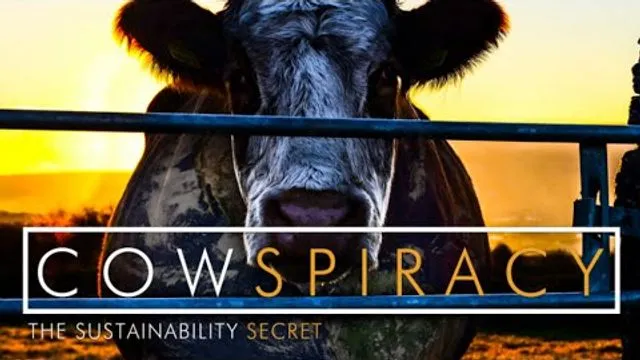
Cowspiracy (2014) put animal agriculture's environmental cost in front of a mass audience and pressed a point most mainstream environmental groups were avoiding at the time. It is persuasive, and it genuinely moved the conversation. The impact it points to is well supported and undeniable: animal agriculture is a major driver of greenhouse gas emissions, land use, and water use. Some sources disagree about a few of the specific numbers the film quotes, but that disagreement is about the size of the figures, not whether the problem is real.
Seaspiracy (2021), from some of the same team, turned to fishing and the oceans. The issues it raises are real and worth your attention: bycatch, ghost gear, and the sheer scale of industrial fishing. Here the impact is well supported and undeniable too, even if some sources disagree about a few of the specific numbers and how certain studies were used. The concerns hold up, and the precise figures are where to read further.
The caveat for this whole category is the same one, stated once: these are advocacy films, not peer review. They are built to persuade, and persuasion rewards the dramatic number over the careful one. The strongest environmental case for changing how we eat does not depend on any contested film statistic. It rests on the research libraries behind our pages on land use and water, where every figure is sourced and hedged. Watch the films for the picture; trust the studies for the numbers.
Books and tools worth keeping
Books carry an argument better than film does in one respect: they have room to show their work and cite it.
How Not to Die (Michael Greger) is a popular, heavily referenced tour of diet and chronic disease, organized by condition. It is useful as a map of the evidence, with the same caution that applies to any single-author health book: an author selecting which studies to feature is making editorial choices, so read it as a well-sourced argument rather than a neutral textbook. The references at the back are the part to follow.
Why We Love Dogs, Eat Pigs, and Wear Cows (Melanie Joy) is the standard introduction to the psychology of why we treat some animals as food and others as family, the idea Joy calls carnism. It is a framing book rather than a data book, and it is best read as a lens for noticing your own habits, not as empirical proof of a mechanism.
For shorter, free material, Ed Winters (Earthling Ed) has a large library of talks and debates on YouTube that work through the common objections one at a time. They pair well with our own walkthrough of the arguments for eating animals.
On tools, you do not need anything fancy to start. A grocery-scanning app that flags animal ingredients, a recipe app, and a notes file of meals that worked will get most people further than any film. The practical pages on this site, from getting started to the meal plan, are built to do that job without asking you to take anything on faith.
The thread running through all of it: a film or a book is a door, not a destination. The ones here are worth opening. Just keep walking, into the sources, once you are through.